↓
 

ISSN: 2542-2006

Ecology and dynamics

Just another WordPress site

  • Main page
  • Contacts
  • Open Access
  • Archive
    • Opening Statement of the Editor-in-Chief
    • Articles
      • Articles. No.3, 2019
      • Articles. No.4, 2019
      • Articles. No.1, 2020
      • Articles. No.2, 2020
      • Articles. No.3, 2020
      • Articles. No.4, 2020
      • Articles. No.1, 2021
      • Articles. No.2, 2021
      • Articles. No.3, 2021
      • Articles. No.4, 2021
      • Articles. No.1, 2022
      • Articles. No.2, 2022
      • Articles. No.3, 2022
      • Articles. No.3, 2023
      • Articles. No.1, 2023
      • Articles. No.2, 2023
      • Articles. No.3, 2023
      • Articles. No.4, 2023
      • Articles. No.1, 2024
      • Articles. No.2, 2024
      • Articles. No.3, 2024
      • Articles. No.4, 2024
      • Articles. No.1, 2025
      • Articles. No.2, 2025
      • Articles. No.3, 2025
      • Articles. No.4, 2025
    • Issues
      • Issues for 2017
      • Issues for 2018
      • Issues for 2019
      • Issues for 2020
      • Issues for 2021
      • Issues for 2022
      • Issues for 2023
      • Issues for 2024
      • Issues for 2025
      • Issues for 2026

Архив метки: specially protected natural areas

FLORISTIC TRANSFORMATIONS IN THE VALLEY OF THE UNITSA RIVER (MOSCOW REGION)

Ecology and dynamics Опубликовано 21 сентября, 2026 автором admin21 сентября, 2026

Shvetsov A.N., Kuklina A.G., Ozerova N.A. Floristic Transformations in the Valley of the Unitsa River (Moscow Region) // Ecosystems: ecology and dynamics. No 2. 2026. P. 93-61. | Abstract | PDF | Reference


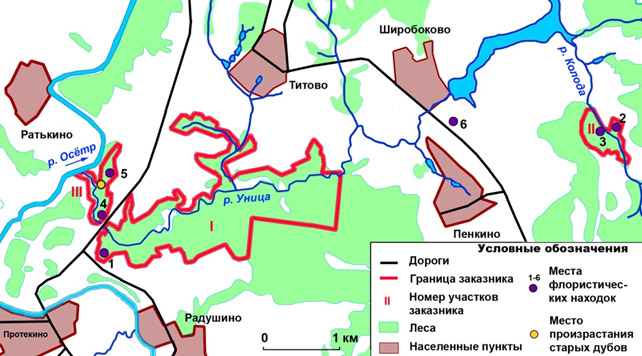
Schematic map of the specially protected natural area “Unitca River Valley” and the adjacent territories, with locations of rare and vulnerable plant species
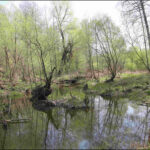
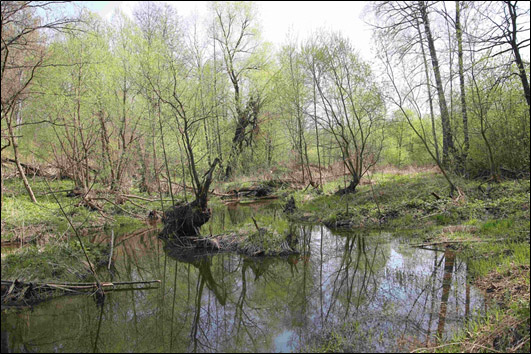
The Unitsa River near the Radushino Village (photo by N.A. Ozerova)
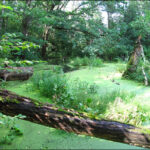
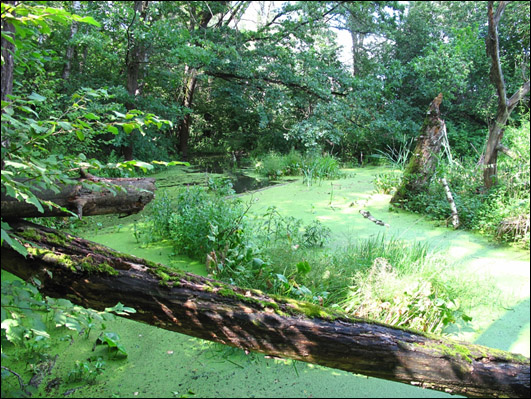
Koloda River, the tributary of the Unitsa River, area No. 2 (photo by A.N. Shvetsov)
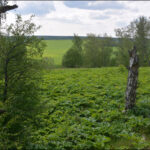
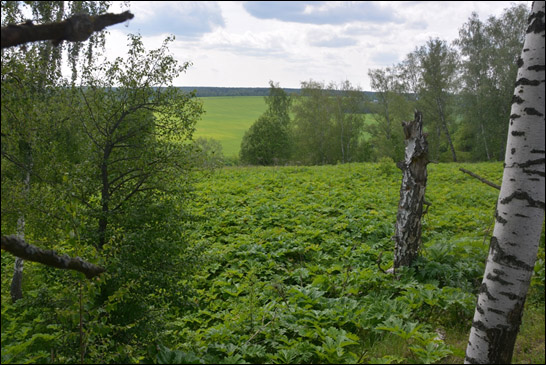
The sloping right bank of the Osetr River, overgrown with Heracleum sosnowskyi (photo by A.N. Shvetsov)
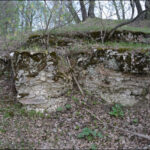
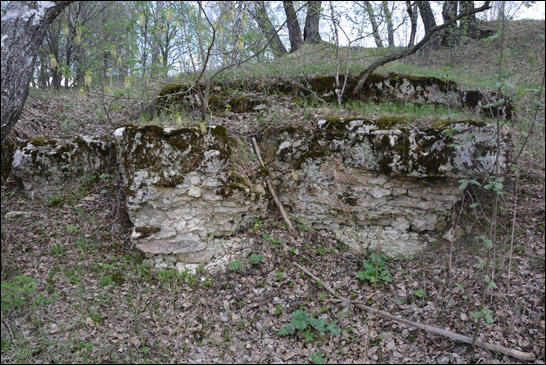
The Osetr River floodplain terrace with limestone outcrops (photo by A.N. Shvetsov)
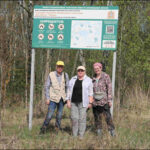
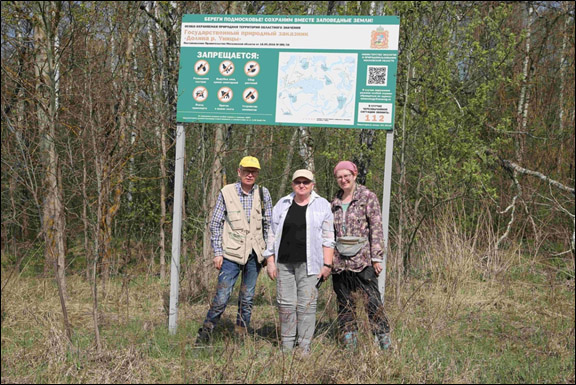
A.N. Shvetsov, A.G. Kuklina and N.A. Ozerova are studying the flora in the “Unitsa River Valley” Nature Reserve, 23/04/2025 (photo by M.B. Goldovskaya)
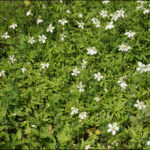
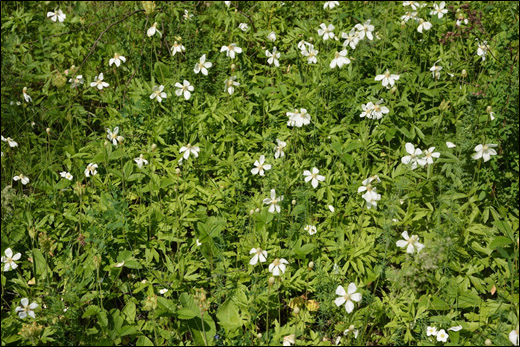
Anemone sylvestris and Heracleum sosnowskyi on the Osetr River terrace with limestone outcrops (photo by A.N. Shvetsov)
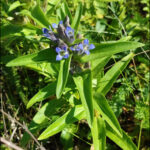
Gentiana cruciata in the meadow of the Osetr River floodplain terrace (photo by A.G. Kuklina)
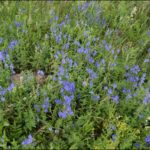
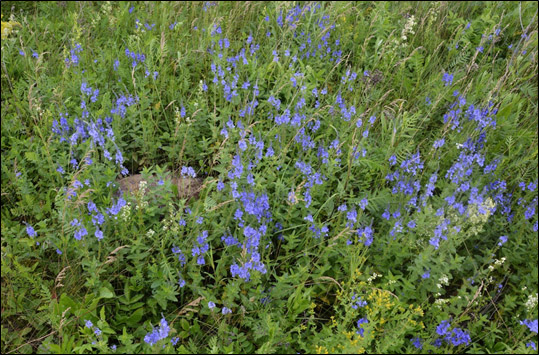
Veronica teucrium in a meadow of the Unitsa River valley, south of the Shirobokovo Village (photo by A.N. Shvetsov)
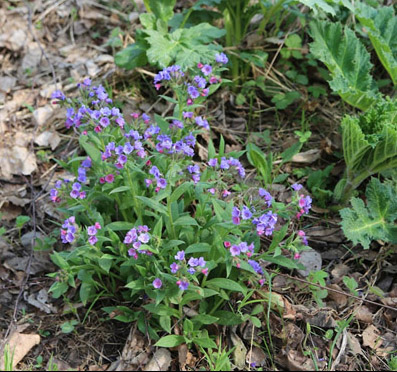
During the field survey at the natural reserve “Unitsa River Valley” and adjacent territories (total area ≈300 ha) in the municipal district of Zaraysk, Moscow Region, a floristic list was compiled of 346 species of vascular plants. For the first time, the habitats of 3 rare taxa were identified: Anemone sylvestris, Gentiana cruciata, and Pulmonaria angustifolia, which are listed in the Red Data Book of the Moscow Region (2018). Among the identified species, 12 require regular monitoring. Among the 28 alien taxa found, there are 12 invasive and 5 potentially invasive species that tend to spread. A retrospective analysis using archives and documents has revealed several historical stages of the natural complexes in this reserve. It has been established that woody vegetation appeared in the basin of the Unica River (within the boundaries of specially protected area) in the last quarter of the 18th century, as a secondary forest at the site of deforestation. In the 1770-1950s, oak forests with birch mixed with linden and aspen were formed; natural resources were harnessed using traditional forest management techniques, cattle grazing and haymaking took place. In the 1950s and 2010s, as a result of human introduction activities, forest crops began to be grown in protected areas. At the current stage, starting in the 2010s, the structure and appearance of phytocenoses have shown signs of restoration of woody vegetation due to the presence of birch and aspen on old arable lands, meadow slopes of the Osetr River, and near-edge fallow lands. The most notable phenomenon of this period was the widespread expansion of Heracleum sosnowskyi, which poses the greatest threat to the natural complex of protected areas and has a detrimental effect on plant diversity and the overall ecosystem.

Keywords: specially protected natural areas, rare species, invasive species, Unitsa River, Zaraysk, Moscow Region.

Funding. This work was carried out for the agreement No. 09/27 on scientific cooperation between the Main Botanical Garden of the Russian Academy of Sciences and Institute for the History of Science and Technology of the Russian Academy of Sciences dated 09/27/2021, as well as the state assignments of the Main Botanical Garden, project No. 126020916823-0 “Biological Diversity, Resource Potential and Preservation of Natural And Cultural Flora under Climatic and Anthropogenic Changes», and the Institute for the History of Science and Technology, project No. 1022041500043-8-6.3.2 “Historical Vectors of Development of Geography and Geology in Russia: Identification of the Main Links between the Practice Requests and the Development of Geography and Geology, the Interaction of Individual Directions at Different Stages of the History of the Earth Sciences”.

Conflict of interest: The authors declare that there are no apparent or potential conflicts of interest related to the publication of this article.

DOI: 10.24412/2542-2006-2026-2-61-93

EDN: STFOIJ

Рубрика: article-2-2026, News | Метки: invasive species, Moscow region, rare species, specially protected natural areas, Unitsa River, Zaraysk

AVIFAUNA BIODIVERSITY IN SOME RESERVOIRS OF KALMYKIA UNDER THE MODERN CLIMATE CHANGE AND INCREASING ANTHROPOGENIC LOAD

Ecology and dynamics Опубликовано 22 декабря, 2025 автором admin1 апреля, 2026

Shapovalova I.B. Avifauna Biodiversity in Some Reservoirs of Kalmykia under the Modern Climate Change and Increasing Anthropogenic Load // Ecosystems: ecology and dynamics. No 4. 2025. P. 125-145. | Abstract | PDF | Reference


A little bustard (Tetrax tetrax) in a meadow near the road, at the mouth of the Kirasta River (here and below all photos are taken by the author)
The spoonbills (Platalea leucorodia) on the Dunda River near the village of Kievka
A long-legged buzzard (Buteo rufinus) near the road, in a strip of man-made grove
A black-winged stilt (Himantopus himantopus) is nesting in the flooded lower floodplain of the Gashun River near the village of Oktyabrsky

The black-winged pratincoles (Glareola nordmanni) on a saline coastal strip in a drainage zone of Deed-Khulsun Lake
The pied avocets (Recurvirostra avosetta), feeding in a shallow water in the backwater zone of Deed-Khulsun Lake
The bachelor individuals of Dalmatian pelicans (Pelecanus crispus) in the backwater zone of Deed-Khulsun Lake
A pair of resting Eurasian whimbrels (Numenius phaeopus), the rare migratory species in the region

A flock of glossy ibises (Plegadis falcinellus) at the Chogray Reservoir dam
The little egrets (Egretta garzetta) are a rare breeding and migratory species at Podmanok-2 Lake
The little stints (Calidris minuta) are a rare migratory species at Podmanok-3 Lake of the Manych River basin
A citrine wagtail (Motacilla citreola) is a rare migratory and nesting species at Deed-Khulsun Lake

In this paper, we examine the state of avifauna of several wastewater and drainage water reservoirs, as well as man-made reservoirs of the Republic of Kalmykia, in 2025. We studied the composition and structure of the coastal bird communities of Lake Manych-Gudilo, Lake Ded-Khulsun, and the Chogray Reservoir, as well as several smaller reservoirs of local significance, since they are considered key bird areas of Russia. The water of some of these reservoirs, such as Manych-Gudilo and Ded-Khulsun, are specially protected natural areas of federal and regional significance, which facilitates their monitoring. We provided a current assessment of the diversity of the avifauna and bird populations of these reservoirs and their shores, including species composition, abundance, and abundance indicators. We also assessed the contribution of these reservoirs to the conservation and enrichment of regional biodiversity. We then made recommendations for managing their hydrological regime to maintain and preserve coastal ecosystems, including populations of rare and vulnerable bird species.

Acknowledgments. The author thanks the editor-in-chief and reviewers of “Arid Ecosystems” for their help with preparation of this article for publication; additionally, the author thanks Zh.V. Kuzmina and E.I. Tobolova.

Funding. This work was carried out for the research project of the Water Problems Institute of the Russian Academy of Sciences for 2025-2027, “Study of Surface and Groundwater Quality Formation Processes, Natural and Anthropogenic Mechanisms of Change in the Ecological Status of Water Bodies, Development of Methods and Technologies for Water Resources and Water Quality Management” (No. FMWZ-2025-0002), state registration No. 125030703344-8.

Keywords: steppe zone, desert zone, water reservoir, aridization, hydrological regime, climate, ecosystem, ornithocomplexes, bird population, rare bird species, key ornithological areas, specially protected natural areas, Red Data Book, risk of species extinction, factors affecting populations of near-water bird species, anthropogenic impact.

DOI: 10.24412/2542-2006-2025-4-125-145

EDN: MXHPLU

Метки: anthropogenic impact, aridization, bird population, climate, desert zone, ecosystem, factors affecting populations of near-water bird species, hydrological regime, key ornithological areas, ornithocomplexes, rare bird species, Red Data Book, risk of species extinction, specially protected natural areas, steppe zone, water reservoir

About the Journal

  • General Information
  • Open Access
  • Editorial Board
  • Editorial Policy
  • Editorial Ethics

Submission of the Articles

  • Guideline for writing an article
  • Guidelines for Submission
  • Guidelines for Design
  • Guidelines for Abstract

Reviewing

  • Guidelines for Reviews

Archive

  • Opening Statement of the Editor-in-Chief
  • Articles
    • Articles. No.3, 2019
    • Articles. No.4, 2019
    • Articles. No.1, 2020
    • Articles. No.2, 2020
    • Articles. No.3, 2020
    • Articles. No.4, 2020
    • Articles. No.1, 2021
    • Articles. No.2, 2021
    • Articles. No.3, 2021
    • Articles. No.1, 2023
    • Articles. No.2, 2023
    • Articles. No.3, 2023
    • Articles. No.4, 2023
    • Articles. No.1, 2024
    • Articles. No.2, 2024
    • Articles. No.3, 2024
    • Articles. No.4, 2024
    • Articles. No.1, 2025
    • Articles. No.2, 2025
    • Articles. No.3, 2025
    • Articles. No.4, 2025
  • Issues
    • Issues for 2017
    • Issues for 2018
    • Issues for 2019
    • Issues for 2020
    • Issues for 2021
    • Issues for 2022
    • Issues for 2023
    • Issues for 2024
    • Issues for 2025
    • Issues for 2026
  • Photos
  • Events
©2026 - Ecology and dynamics - Weaver Xtreme Theme
↑