
FLORISTIC TRANSFORMATIONS IN THE VALLEY OF THE UNITSA RIVER (MOSCOW REGION)
Shvetsov A.N., Kuklina A.G., Ozerova N.A. Floristic Transformations in the Valley of the Unitsa River (Moscow Region) // Ecosystems: ecology and dynamics. No 2. 2026. P. 93-61. | Abstract | PDF | Reference
-

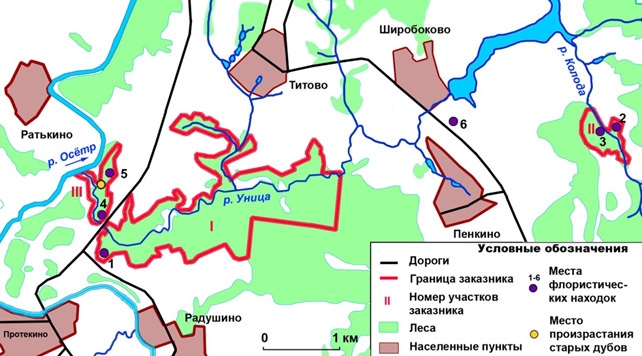
- Schematic map of the specially protected natural area “Unitca River Valley” and the adjacent territories, with locations of rare and vulnerable plant species
-
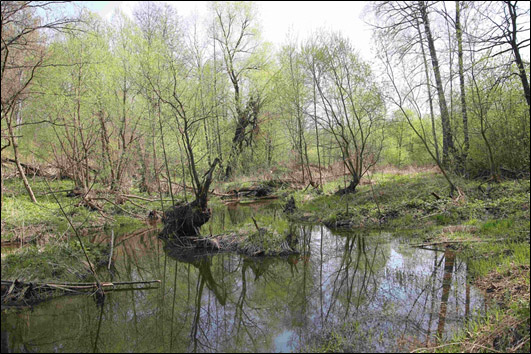
- The Unitsa River near the Radushino Village (photo by N.A. Ozerova)
-
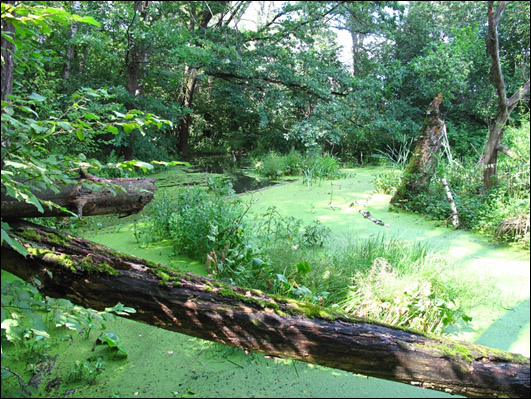
- Koloda River, the tributary of the Unitsa River, area No. 2 (photo by A.N. Shvetsov)
-
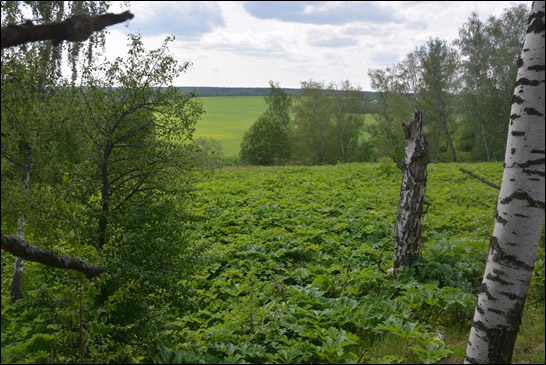
- The sloping right bank of the Osetr River, overgrown with Heracleum sosnowskyi (photo by A.N. Shvetsov)
-
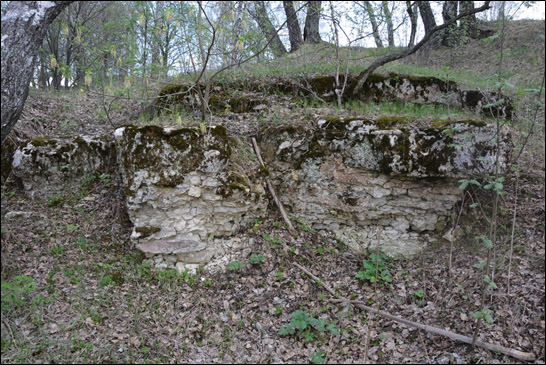
- The Osetr River floodplain terrace with limestone outcrops (photo by A.N. Shvetsov)
-
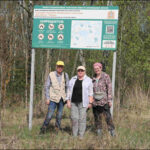
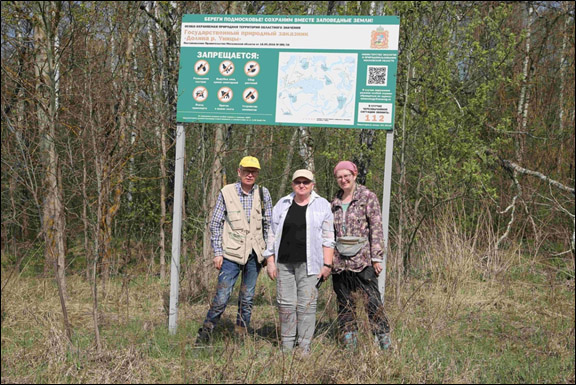
- A.N. Shvetsov, A.G. Kuklina and N.A. Ozerova are studying the flora in the “Unitsa River Valley” Nature Reserve, 23/04/2025 (photo by M.B. Goldovskaya)
-
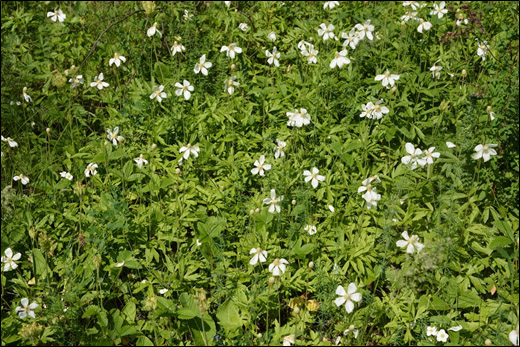
- Anemone sylvestris and Heracleum sosnowskyi on the Osetr River terrace with limestone outcrops (photo by A.N. Shvetsov)
-
- Gentiana cruciata in the meadow of the Osetr River floodplain terrace (photo by A.G. Kuklina)

-
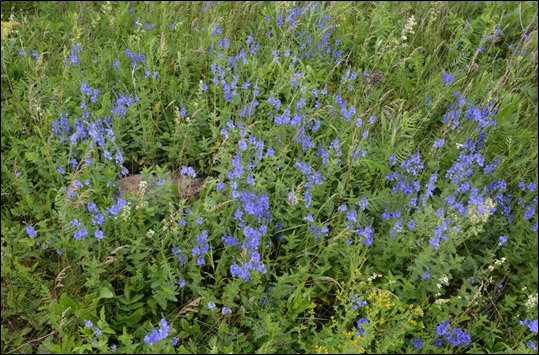
- Veronica teucrium in a meadow of the Unitsa River valley, south of the Shirobokovo Village (photo by A.N. Shvetsov)
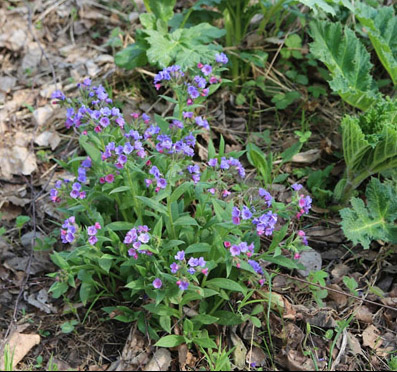
During the field survey at the natural reserve “Unitsa River Valley” and adjacent territories (total area ≈300 ha) in the municipal district of Zaraysk, Moscow Region, a floristic list was compiled of 346 species of vascular plants. For the first time, the habitats of 3 rare taxa were identified: Anemone sylvestris, Gentiana cruciata, and Pulmonaria angustifolia, which are listed in the Red Data Book of the Moscow Region (2018). Among the identified species, 12 require regular monitoring. Among the 28 alien taxa found, there are 12 invasive and 5 potentially invasive species that tend to spread. A retrospective analysis using archives and documents has revealed several historical stages of the natural complexes in this reserve. It has been established that woody vegetation appeared in the basin of the Unica River (within the boundaries of specially protected area) in the last quarter of the 18th century, as a secondary forest at the site of deforestation. In the 1770-1950s, oak forests with birch mixed with linden and aspen were formed; natural resources were harnessed using traditional forest management techniques, cattle grazing and haymaking took place. In the 1950s and 2010s, as a result of human introduction activities, forest crops began to be grown in protected areas. At the current stage, starting in the 2010s, the structure and appearance of phytocenoses have shown signs of restoration of woody vegetation due to the presence of birch and aspen on old arable lands, meadow slopes of the Osetr River, and near-edge fallow lands. The most notable phenomenon of this period was the widespread expansion of Heracleum sosnowskyi, which poses the greatest threat to the natural complex of protected areas and has a detrimental effect on plant diversity and the overall ecosystem.
Keywords: specially protected natural areas, rare species, invasive species, Unitsa River, Zaraysk, Moscow Region.
Funding. This work was carried out for the agreement No. 09/27 on scientific cooperation between the Main Botanical Garden of the Russian Academy of Sciences and Institute for the History of Science and Technology of the Russian Academy of Sciences dated 09/27/2021, as well as the state assignments of the Main Botanical Garden, project No. 126020916823-0 “Biological Diversity, Resource Potential and Preservation of Natural And Cultural Flora under Climatic and Anthropogenic Changes», and the Institute for the History of Science and Technology, project No. 1022041500043-8-6.3.2 “Historical Vectors of Development of Geography and Geology in Russia: Identification of the Main Links between the Practice Requests and the Development of Geography and Geology, the Interaction of Individual Directions at Different Stages of the History of the Earth Sciences”.
Conflict of interest: The authors declare that there are no apparent or potential conflicts of interest related to the publication of this article.
DOI: 10.24412/2542-2006-2026-2-61-93
EDN: STFOIJ