

Shirokikh P.S., Zhigunova S.N., Gimazetdinov V.D., Bikbayev I.G., Tuktamyshev I.R., Martynenko V.B., Baisheva E.Z., Gabbasova D.T., Gulov D.M. Impact of Extreme Climate on the Carbon Balance of Steppe Ecosystems with Different Land-Use Regimes // Ecosystems: ecology and dynamics. No 3. 2026. P. 5-24. | Abstract | PDF | Reference
-

- A frame for measuring greenhouse gas fluxes on a wormwood pasture (photo by V.D. Gimazetdinov)
-

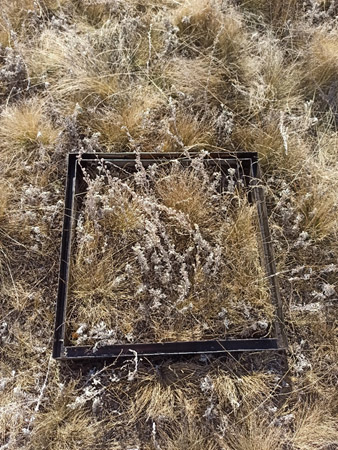
- Plot 1 – natural steppe at the end of the growing season (photo by V.D. Gimazetdinov)
-

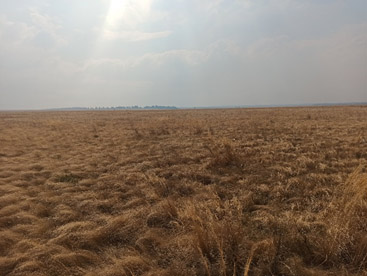
- Plot 3 – mixed grass pasture, September (photo by V.D. Gimazetdinov)
-
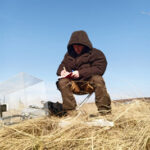
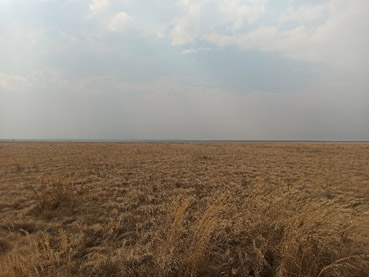
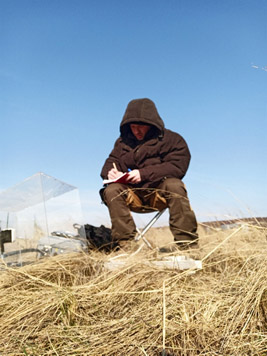
- The process of measuring greenhouse gas fluxes at the beginning of the growing season (photo by V.D. Gimazetdinov)
-

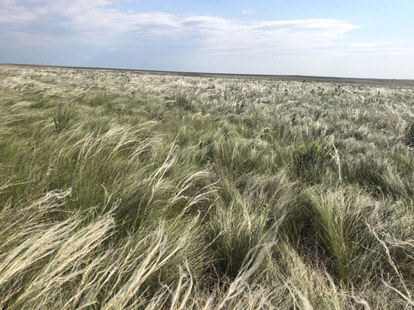
- Natural steppe during the period of maximum productivity (photo by V.D. Gimazetdinov)
-

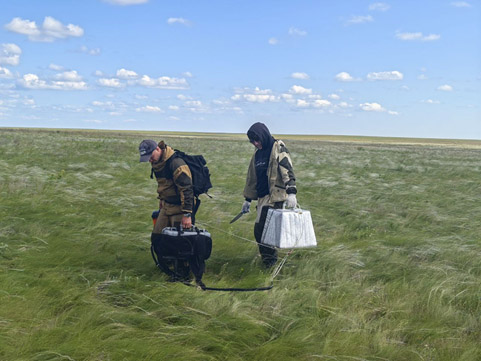
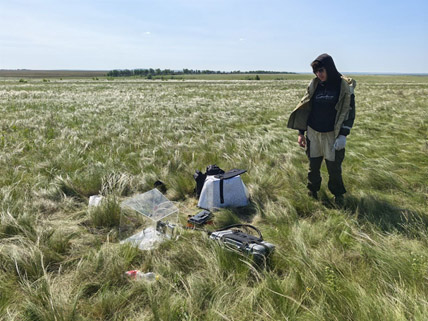
- The process of measuring greenhouse gas fluxes during the daytime phase (photo by I.R. Tuktamyshev). Photo by V.D. Gimazetdinov.
-
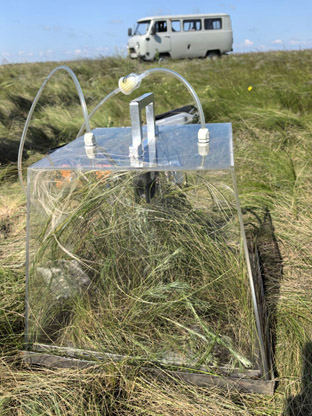
- Camera view during the daytime phase of greenhouse gas flux measurements (photo by V.D. Gimazetdinov)
-
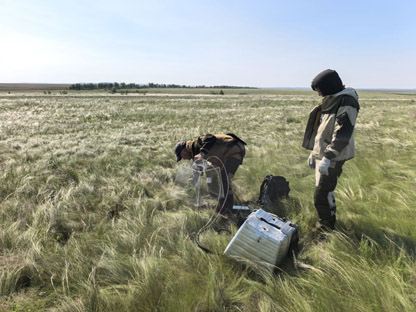
- Camera installation in the natural steppe (photo by V.D. Gimazetdinov and I.R. Tuktamyshev). Photo by P.S. Shirokikh.
-
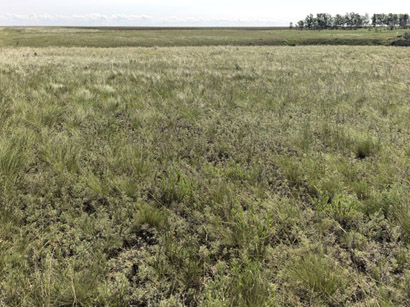
- Wormwood pasture in the middle of the growing season (photo by P.S. Shirokikh)
We present the first results of our direct chamber measurements of CO₂ fluxes (NEE, Reco) in steppe ecosystems of the «Zauralskaya Steppe» site of Eurasian Carbon Polygon (Republic of Bashkortostan) in 2025, during the hydrothermally abnormal vegetation season. Our aim was to assess the seasonal carbon balance of 4 ecosystems under conditions of a spring‑shifted precipitation maximum and enhanced summer water stress: the natural steppe, post‑agrogenic fallow, forb‑dominated pasture, and Artemisia pasture. These ecosystems were found to function as net sources of CO₂. The cumulative carbon emission from April to September amounted to 284.4 gC m⁻² in the natural steppe, 60.1 gC m⁻² in the forb‑dominated pasture, 66.0 gC m⁻² in the Artemisia pasture, and 85.0 gC m⁻² in the fallow. The largest daytime CO₂ uptake (NEE) was observed in June at the forb‑dominated pasture (−187 mgC m⁻² h⁻¹) and fallow (−171.6 mgC m⁻²h⁻¹), but this sink potential was offset by high ecosystem respiration, with Reco peaking at 387.3 mgC m⁻²h⁻¹ at the fallow. The main drivers of the seasonal net emission balance were the earlier start of snowmelt (29 March), the shift of the NDVI peak to late May, and the subsequent water stress (92 days with VPD > 1.5 kPa), which suppressed photosynthesis, while maintaining high respiratory fluxes. The results of our research indicate that, under the hydrothermal conditions of 2025, a shift of the phenological window of active vegetation and enhanced respiration made the steppe ecosystems of the Trans-Urals a persistent CO₂ source, regardless of their land‑use type.
Keywords: steppe ecosystems, pastures, carbon balance, CO₂ flux, net ecosystem exchange, NEE, ecosystem respiration, Reco, vapor pressure deficit, VPD, post‑agrogenic fallow, Southern Ural region.
DOI: 10.24412/2542-2006-2026-3-5-24
EDN: OSEBJH