

Dostovalova D.A., Glukhov A.Z., Podgorodetsky N.S. Biotechnologies in the Restoration of Anthropogenic Disturbed Ecosystems
and the Disposal of Coal Mine Dumps // Ecosystems: ecology and dynamics. No 3. 2026. P. 123-131. | Abstract | PDF | Reference
-
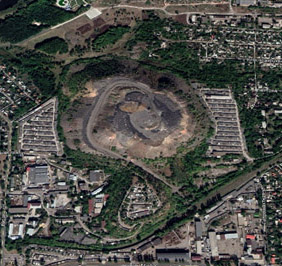
- Satellite image of the rock dumps of the Central Processing Plant “Chumakovskaya”

-

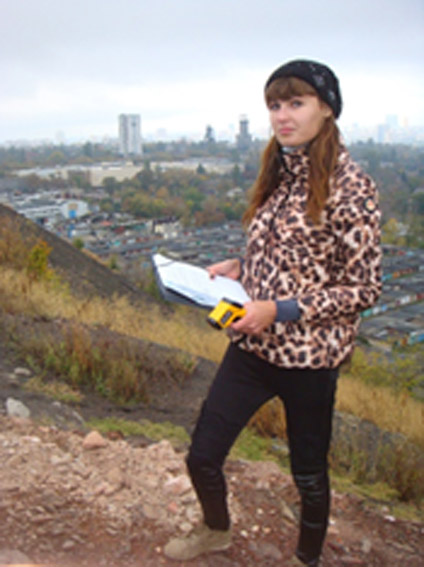
- Temperature survey of the rock dump of the M.I. Kalinin mine (Donetsk, DPR) (photo by D.A. Dostovalova)
-

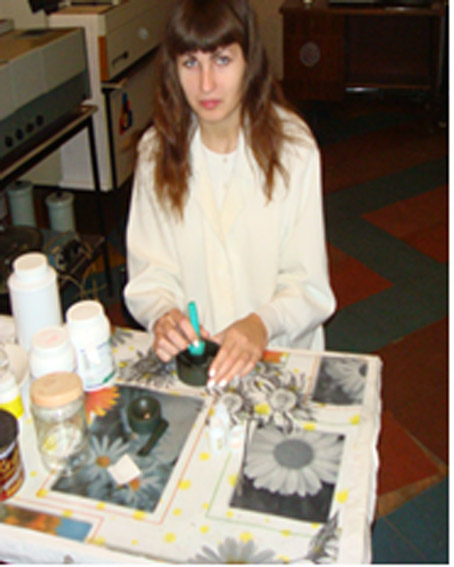
- Preparation of samples of mine waste rock for analysis using an IR‑Fourier spectrophotometer (photo by D. A. Dostovalova)
-

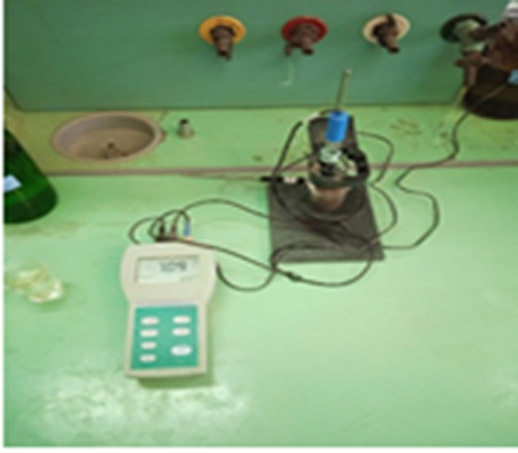
- Measurements of the pH of an aqueous extract from a sample of mine waste rock (photo by D.A. Dostovalova)
-
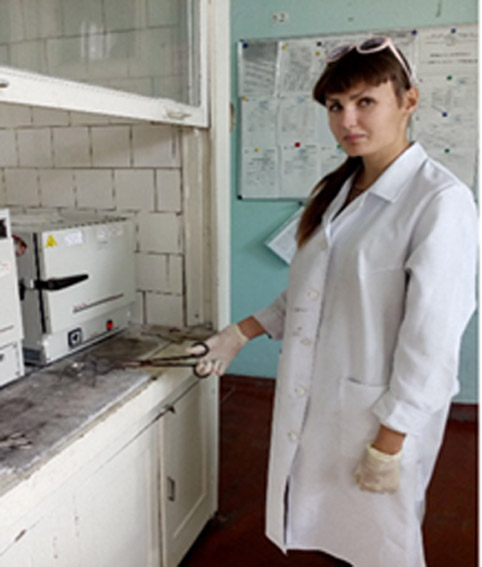
- Conducting an analysis to isolate sesquioxides of metals from mine waste rock in a muffle furnace (photo by D.A. Dostovalova)
-

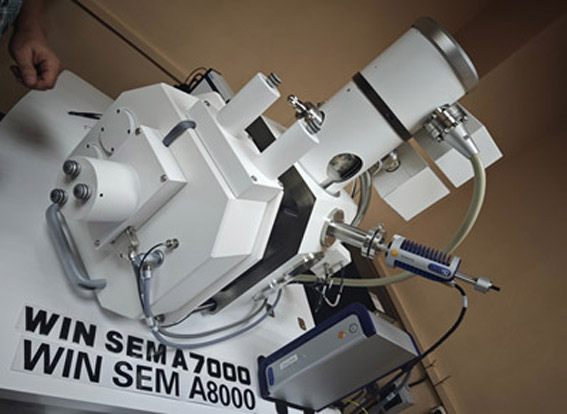
- WIN SEM A7000 electron scanning microscope (photo by D.A. Dostovalova)
-
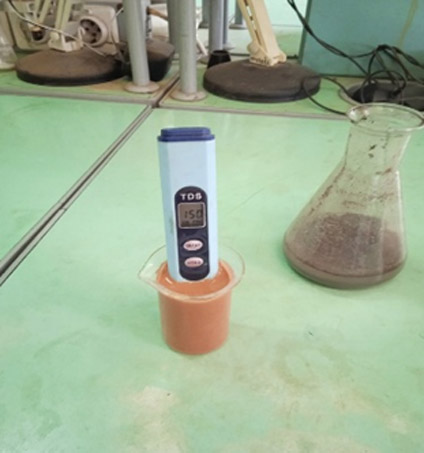
- Measurements of the salinity of an aqueous extract from a sample of mine waste rock using a TDS salt analyzer (photo by D.A. Dostovalova)
-

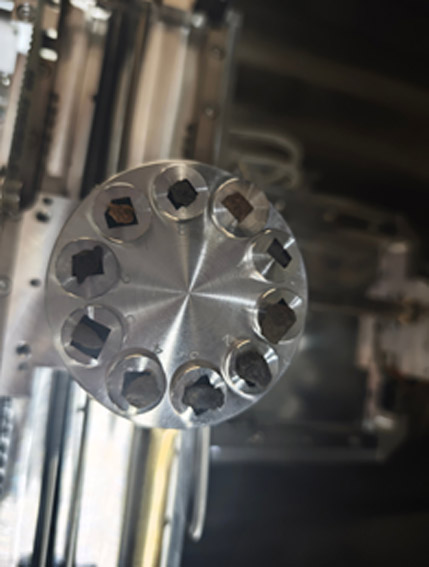
- Rock samples placed in a WIN SEM A7000 scanning electron microscope (photo by D.A. Dostovalova)
-
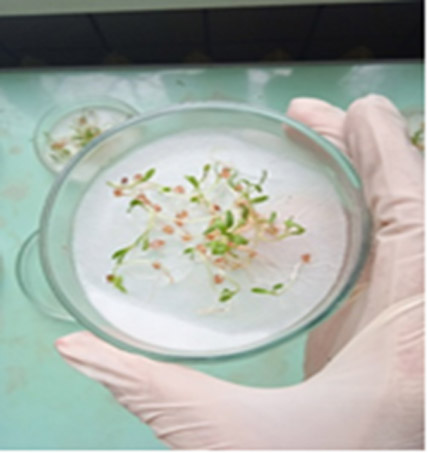
- Watercress seedlings in samples of rock from mine tailings (assessment of the phytotoxicity of the rock) (photo by D.A. Dostovalova)
In this article we explore the possibilities of using hyperaccumulative plants in the restoration of anthropogenically disturbed ecosystems, specifically, the coal mine dumps. For that, we have developed a comprehensive way to separate the rare, rare earth and heavy metals using such plants.
We used surveys, analytical, computational, and graphical methods.
The objects of our research are the coal dumps located within the cities Donetsk, Makeyevka, Shakhtersk, and Snezhnoye of the Donetsk People’s Republic. Eventually, we hope to apply the proposed technology to all coal dumps of the Russian Federation. For now, we use the rocks of the rock dumps of the Kalinin Mine (flat, burning, partially reclaimed) and the Chumakovskaya Mine in Donetsk (conical, burnt out, not reclaimed) as the examples for the analysis of their chemical compositions.
The research was conducted at the Department of Nanostructure Analysis, the Polytechnic Engineering Center of Donetsk National Technical University, using the following devices: the C156TE carbon deposition system (a carbon deposition unit with a turbomolecular pump for sample preparation by electron microscopy), and the WIN SEM A7000 scanning electron microscope. There, the results of the chemical composition analysis of individual microzones of rock samples were obtained. Statistical results were obtained using the Statistica Program.
During the statistical processing of the results, we found out that for the rock of the landfills, the percentage of elements was 0.005 on average (the standard deviation is 0.001). The difference between the 2 averages of these 2 dependent groups was 0.012 (the standard deviation is 0.018). The Student’s t-test is 2.05. Percentage differences of the elements in the landfills rocks are statistically significant at a high level of significance (p = 0.052).
The high aluminum content is due to the rock destruction, alunitization and weathering. The dumps are also characterized by high iron content (10-50%), with trace amounts of titanium, copper, sodium, and lead. Thus, it is advisable to separate metals from the rock, primarily iron, aluminum, and lead.
Hyperaccumulative plants (winter/spring rapeseed, lupine, common mustard) can also be used to extract metals from a coal dump. Such process includes planting their seeds on the slopes and plateaus of the dumps, protecting the growing seedlings from pests, collecting and processing their biomass. According to our technology, when separating metals from landfill rock, the following laboratory devices should be used: a mechanical sieve, a porcelain mortar, a muffle furnace with a maximum heating temperature of 1200°C, and an acid leach (agitator). The preparation of the initial rock sample involves 2 operations: classification, and salting. The classification of the starting material is performed with a mechanical sieve of 40 and 25 microns. Next, the plant samples are crushed in a porcelain mortar, and ozonized in a muffle furnace at 400-500°C for 120-240 minutes. Afterwards, metals are leached using a laboratory agitator, with the output being a pulp with metal concentrate.
Due to a shortage of raw materials, the environment of the studied republics, as well as of the coal-mining regions of Russia in general, requires a technological scheme for the disposal of coal dumps using a mechanical sieve, porcelain mortar, muffle furnace and acid leach (agitator). This method may include planting hyperaccumulator plants on the slopes and plateaus of the dumps, with further monitoring of the plants.
Keywords: utilization, raw material resource, rock dump, hyperaccumulator plants.
DOI: 10.24412/2542-2006-2026-3-123-131
EDN: AELDYK