

RESULTS OF A STUDY OF THE DAILY ACTIVITY AND BEHAVIOR OF PTEROMYS VOLANS LINNAEUS, 1758 USING CAMERA TRAPS IN THE ZEYA NATURE RESERVE (AMUR REGION)
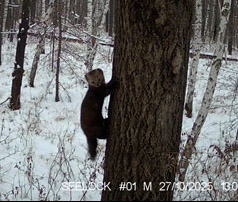
Chemirskaya D.S. Results of a Study of the Daily Activity and Behavior of Pteromys volans Linnaeus, 1758 using Camera Traps in the Zeya Nature Reserve (Amur Region) // Ecosystems: ecology and dynamics. No 3. 2026. P. 82-93. | Abstract | PDF | Reference
-
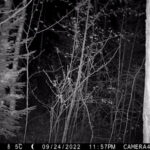
- Observation site No. 2 with two flying squirrels simultaneously preparing a nest for winter

-

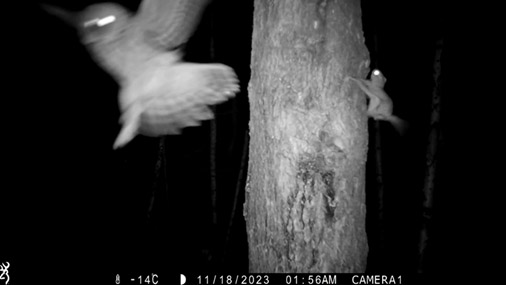
- Observation site No. 1 with an Ural owl hunting a flying squirrel
-

- Observation site No. 1 with a flying squirrel showing an investigative behavior toward another squirrel in a tree hollow

-
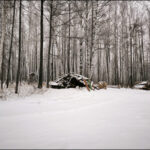
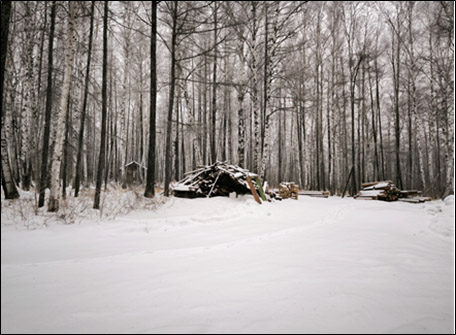
- A dismantled hut near observation site No. 1 in 2024 (photo by the author)
We present the results of observations of the daily activity and behavior of the common flying squirrel (Pteromys volans Linnaeus, 1758) carried out with the camera traps Browning Recon Force Advantage and Seelock S308W. These models have proven themselves effective in surveying both small and large mammals due to their high response speed.
Our observations have started in 2022. However, the most important data was obtained in the winter of 2024-2025, due to the removal of a dilapidating house that served as a work station for the reserve rangers. Data on the flying squirrels’ daily activity and behavioral activity in different months was analyzed, especially the manifestation of their orienting behavior (alertness). Studies of the relationship between the squirrels’ daily activity and human presence are of interest for their impact on animal behavior. Thus, increasing visitation to nature reserves through environmental education (guided tours, nature trails for kids), and organizing tourist routes may impact the lifestyles of some species.
Information on the performance of camera traps when recording small mammals is also important, because different models have different response times, and fast-moving species are hard to film. Failed footage often has empty frames, since the camera misses the moment the subject appears and begins capturing an empty area only after it is gone.
Key words: common flying squirrel, Pteromys volans, diurnal activity, camera traps, human presence, behavior.
DOI: 10.24412/2542-2006-2026-3-82-93
EDN: WCJYGA