
↓
 

ISSN: 2542-2006

Ecology and dynamics

Just another WordPress site

  • Main page
  • Contacts
  • Open Access
  • Archive
    • Opening Statement of the Editor-in-Chief
    • Articles
      • Articles. No.3, 2019
      • Articles. No.4, 2019
      • Articles. No.1, 2020
      • Articles. No.2, 2020
      • Articles. No.3, 2020
      • Articles. No.4, 2020
      • Articles. No.1, 2021
      • Articles. No.2, 2021
      • Articles. No.3, 2021
      • Articles. No.4, 2021
      • Articles. No.1, 2022
      • Articles. No.2, 2022
      • Articles. No.3, 2022
      • Articles. No.3, 2023
      • Articles. No.1, 2023
      • Articles. No.2, 2023
      • Articles. No.3, 2023
      • Articles. No.4, 2023
      • Articles. No.1, 2024
      • Articles. No.2, 2024
      • Articles. No.3, 2024
      • Articles. No.4, 2024
      • Articles. No.1, 2025
      • Articles. No.2, 2025
      • Articles. No.3, 2025
      • Articles. No.4, 2025
    • Issues
      • Issues for 2017
      • Issues for 2018
      • Issues for 2019
      • Issues for 2020
      • Issues for 2021
      • Issues for 2022
      • Issues for 2023
      • Issues for 2024
      • Issues for 2025
      • Issues for 2026

Архив метки: transboundary rivers

THE INTERNATIONAL SCIENTIFIC PROJECT ON ENVIRONMENTAL FLOW AS THE BASIS FOR ECOSYSTEM CONSERVATION

Ecology and dynamics Опубликовано 4 июля, 2022 автором admin1 октября, 2022

Dubinina V.G. The International Scientific Project on Environmental Flow as the Basis for Ecosystem Conservation // Ecosystems: Ecology and Dynamic. No. 2. 2022. P. 134-144. | Abstract | PDF | Reference |


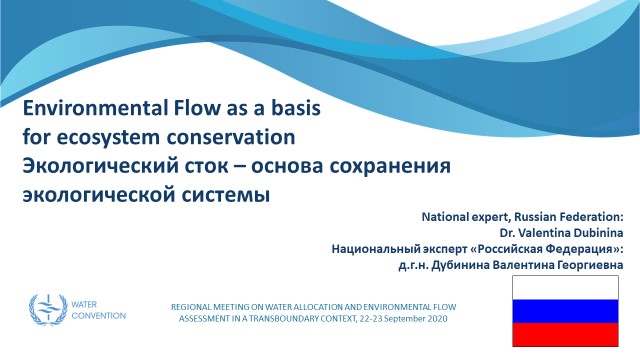
V.G. Dubinina (Central Office for Fishery Expertise and Standards for the Conservation, Reproduction of Aquatic Biological Resources and Acclimatization) at the Regional meeting on the distribution of water resources and the assessment of transboundary environmental flow, September 22-23, 2020 (online participation), Nur-Sultan, Kazakhstan
V.G. Dubinina’s report (Central Office for Fishery Expertise and Standards for the Conservation, Reproduction of Aquatic Biological Resources and Acclimatization) at the Regional meeting, September 22-23, 2020
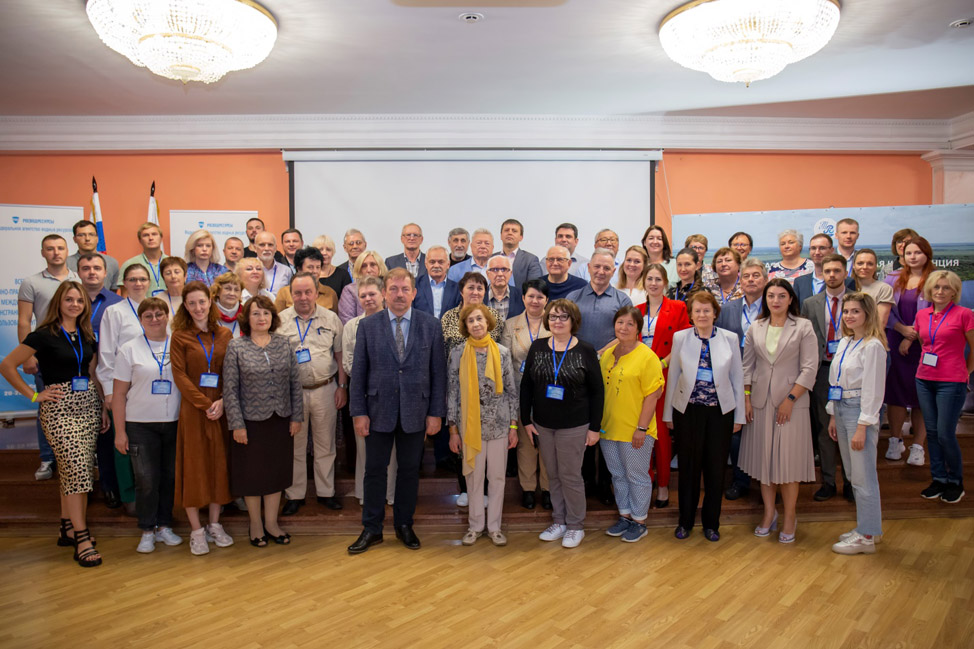
All-Russian Scientific and Practical Conference with international participation “Transboundary Water Bodies: Use, Management, Protection”, September 20-25, 2021, Sochi. First row, from left to right: M.V. Bolgov (Water Problems Institute of RAS), V.G. Dubinina (Central Office for Fishery Expertise and Standards for the Conservation, Reproduction of Aquatic Biological Resources and Acclimatization), K.S. Topilina (Russian Information-Analytical and Research Water Management Center)
All-Russian Scientific and Practical Conference with international participation “Transboundary Water Bodies: Use, Management, Protection”, September 20-25, 2021, Sochi

The article provides information about the international project “Environmental Flow as the Basis for Ecosystem Conservation”. The project was implemented with the support of the Government of Kazakhstan, in cooperation with the Secretariat of the UN Water Convention and participation of the Central Asian countries. The article overviews the management features of the transboundary water bodies of Central Asia and focuses on the problem of accounting for environmental flow, which is important for ecosystem conservation. It describes the methodological approaches to determining the volume of acceptable irretrievable water withdrawal and establishing the environmental flow (discharge), formulated by the Russian and Kazakh participants. It also describes the studies that were carried out by the project participants on the transboundary rivers of their countries. Based on the results, the recommendations for the conservation and restoration of freshwater ecosystems of transboundary rivers are given.

Keywords: intergovernmental agreements, transboundary rivers, water sharing, environmental flow, acceptable irretrievable water withdrawal, freshwater ecosystem conservation.

DOI: 10.24412/2542-2006-2022-2-134-144

EDN: GICGBT

Метки: acceptable irretrievable water withdrawal, environmental flow, freshwater ecosystem conservation, intergovernmental agreements, transboundary rivers, water sharing

About the Journal

  • General Information
  • Open Access
  • Editorial Board
  • Editorial Policy
  • Editorial Ethics

Submission of the Articles

  • Guideline for writing an article
  • Guidelines for Submission
  • Guidelines for Design
  • Guidelines for Abstract

Reviewing

  • Guidelines for Reviews

Archive

  • Opening Statement of the Editor-in-Chief
  • Articles
    • Articles. No.3, 2019
    • Articles. No.4, 2019
    • Articles. No.1, 2020
    • Articles. No.2, 2020
    • Articles. No.3, 2020
    • Articles. No.4, 2020
    • Articles. No.1, 2021
    • Articles. No.2, 2021
    • Articles. No.3, 2021
    • Articles. No.1, 2023
    • Articles. No.2, 2023
    • Articles. No.3, 2023
    • Articles. No.4, 2023
    • Articles. No.1, 2024
    • Articles. No.2, 2024
    • Articles. No.3, 2024
    • Articles. No.4, 2024
    • Articles. No.1, 2025
    • Articles. No.2, 2025
    • Articles. No.3, 2025
    • Articles. No.4, 2025
  • Issues
    • Issues for 2017
    • Issues for 2018
    • Issues for 2019
    • Issues for 2020
    • Issues for 2021
    • Issues for 2022
    • Issues for 2023
    • Issues for 2024
    • Issues for 2025
    • Issues for 2026
  • Photos
  • Events
©2026 - Ecology and dynamics - Weaver Xtreme Theme
↑