↓
 

ISSN: 2542-2006

Ecology and dynamics

Just another WordPress site

Ecology and dynamics
  • Main page
  • Contacts
  • Open Access
  • Archive
    • Opening Statement of the Editor-in-Chief
    • Articles
      • Articles. No.3, 2019
      • Articles. No.4, 2019
      • Articles. No.1, 2020
      • Articles. No.2, 2020
      • Articles. No.3, 2020
      • Articles. No.4, 2020
      • Articles. No.1, 2021
      • Articles. No.2, 2021
      • Articles. No.3, 2021
      • Articles. No.4, 2021
      • Articles. No.1, 2022
      • Articles. No.2, 2022
      • Articles. No.3, 2022
      • Articles. No.3, 2023
      • Articles. No.1, 2023
      • Articles. No.2, 2023
      • Articles. No.3, 2023
      • Articles. No.4, 2023
      • Articles. No.1, 2024
      • Articles. No.2, 2024
      • Articles. No.3, 2024
      • Articles. No.4, 2024
      • Articles. No.1, 2025
      • Articles. No.2, 2025
      • Articles. No.3, 2025
    • Issues
      • Issues for 2017
      • Issues for 2018
      • Issues for 2019
      • Issues for 2020
      • Issues for 2021
      • Issues for 2022
      • Issues for 2023
      • Issues for 2024
      • Issues for 2025

Архив метки: taxonomic composition

CHIRONOMIDS (DIPTERA, CHIRONOMIDAE) OF HIGHLY MINERALIZED RIVERS OF THE ELTON LAKE REGION, RUSSIA: TAXONOMIC COMPOSITION, ECOLOGICAL FEATURES

Ecology and dynamics Опубликовано 6 ноября, 2024 автором admin10 декабря, 2024

Zinchenko T.D., Golovatyuk L.V., Morov V.P. Chironomids (Diptera, Chironomidae) of Highly Mineralized Rivers of the Elton Lake Region, Russia: Taxonomic Composition, Ecological Features // Ecosystems: ecology and dynamics. No 2. 2024. P. 57-107. | Abstract | PDF | Reference


Marsh sandpiper (Tringa stagnatilis) – one of the main consumers of Chironomidae larvae in river estuaries. Estuary of the Khara River, August 2007 (photo by V.P.Churbanov)
Estuary of the Chernavka River is a habitat of many Cricotopus salinophilus and Сhironomus salinarius larvae, August 2014 (photo by T.D.Zinchenko)
Expedition to the Elton Region, “Holodny Klyuch” sanctuary, April 2008. Expedition members: graduate student V.P. Churbanov, ans researchers of the Institute of the Ecology of the Volga River Basin of the Russian Academy of Sciences L.V. Golovatyuk, L.M. Taranova, T.D. Zinchenko (photo by T.V.Popchenko)
Hydrochemical and hydrobiological researches in the middle reaches of the Khara River, August 2013 (photo by T.D.Zinchenko)

Graduate student Vladimir Churbanov during an expedition, sampling the Chironomidae larvae in a stream flowing into the Khara River, April 2008 (photo by T.D.Zinchenko)
Lake Elton Region, estuary of the Khara River at sunrise, August 2006 (photo by T.D.Zinchenko)
Members of the expedition after the storm, May 2011 (photo by E.V. Koltunov)
Expedition members dining in an improvised tent after the storm and a successful acquisition of samples, May 2011 (photo by N.C. Pashinin)

In this article we discuss the analysis results of the data from our long-term studies (2006-2019) of chironomids (Diptera, Chironomidae) that were part of bottom communities of 7 small but highly mineralized rivers, the tributaries of hyperhaline Lake Elton in Volgograd Region (N49° 13′, E46° 40′).

We collected data on species composition and quantitative development of macrozoobenthos communities were and registered 25 species and larval forms of chironomids from 4 subfamilies: Chironominae – 14 species (10 from Chironomini, 4 from Tanytarsini), Orthocladiinae – 9 species, Tanypodinae – 2 species. The structure of chironomids’ communities depends on the physical and chemical characteristics of biotopes, as well as water salinity, and is determined by the trophic indicators of the rivers (Zinchenko, Shitikov et al., 2014). The quantitative development and biodiversity of chironomids’ larvae significantly correlate with environmental conditions and physicochemical characteristics of bottom substrates and water masses.

We determined certain environmental factors, such as total salinity, ionic composition, pH, oxygen concentration, temperature and biotope diversity, that can cause changes in chironomids’ cenosis. Additionally, we provide values of abundance and biomass, and frequencies of species occurrence in rivers of different salinity under the influence of abiotic factors. We also present ecological and faunistic characteristics of chironomids as part of bottom communities of highly mineralized rivers of the Lake Elton region.

Keywords: highly mineralized rivers, chironomids, taxonomic composition, ecological features, mineralization, abiotic factors, tributaries of the Lake Elton.

Acknowledgements. The authors would like to thank Dr. Makarchenko E.V., Dr. Zorina O.V. (Federal Scientific Center for Biodiversity of the Far Eastern Branch of the Russian Academy of Sciences, Vladivostok), Dr. Krasheninnikov A.B. (Perm State National Research University) for the identification of some chironomids, and the staff of the Eltonsky Nature Park for help in making it possible to collect the field material.

Funding. This work was carried out as part of the state task “Changes, Sustainability and Conservation of Biological Diversity under the Global Climate Change and Intensive Anthropogenic Load on the Ecosystems of the Volga River Basin”, registration No. 1021060107212-5-1.6.20; 1.6.19; and with financial support from the Russian Foundation for Basic Research (17-04-00135).

DOI: 10.24412/2542-2006-2024-2-57-107

EDN: WTCQJU

Метки: abiotic factors, article-2-2024, chironomids, ecological features, highly mineralized rivers, mineralization, taxonomic composition, tributaries of the Lake Elton

ALIEN SPECIES OF VASCULAR PLANTS IN PLANT COMMUNITIES OF THE MIDDLE TAIGA OF THE ARKHANGELSK REGION

Ecology and dynamics Опубликовано 26 сентября, 2023 автором admin27 декабря, 2023

Chmykhov А.А. , Leonova N.B. ALIEN SPECIES OF VASCULAR PLANTS IN PLANT COMMUNITIES OF THE MIDDLE TAIGA OF THE ARKHANGELSK REGION // Ecosystems: ecology and dynamics. No 3. 2023. P. 28-48. | Abstract | PDF | Reference


The study area on the contemporary map of the Arkhangelsk Region
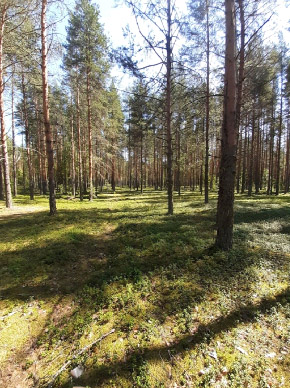
Pine forest in the valley of the Kokshenga River (photo by A.A. Chmykhov)
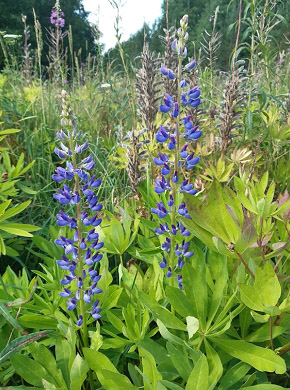
Lupinus pollyphyllus (photo by A.A. Chmykhov)
Heracleum sosnowskyi (photo by A.A. Chmykhov)

Overgrowing fallow land (photo by A.A. Chmykhov)
Lupinus pollyphyllus in a clearing (photo by A.A. Chmykhov)
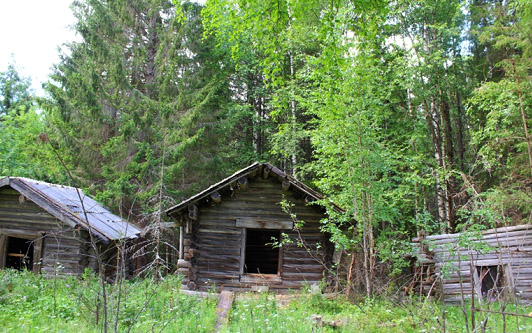
Abandoned village (photo by M.B. Stevanovich)
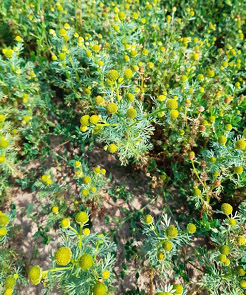
Matricaria discoidea DC on a field road (photo by A.A. Chmykhov)

In this article we discuss the distribution of alien species in the vegetation cover of the middle taiga of the Arkhangelsk Region. This is a relevant problem that has not been studied so far. We used the data of long-term biogeographic studies obtained from the Ustyanskaya Educational and Research Station located in the Arkhangelsk Region, M.V. Lomonosov Moscow State University, Faculty of Geography; as well as our own field materials for 2019-2022. We determined the composition of alien plant species in the study area and analyzed their taxonomic belonging, as well as their ecological and geographical characteristics. We used traditional methods of botanical-geographical field survey and desk processing of collected data, coupled with a list of scientific publications written on the role of alien species in plant communities. Moreover, we analyzed the ecological ranges of species based on D.N. Tsyganov’s ecological scales and mapped the mass occurrence of the most widespread alien species in the key sites of the study area. The results of this study revealed that alien species in the vegetation cover of the middle taiga of the Arkhangelsk Region currently account for about 9% of the floristic list, most of them being introduced into the region intentionally during agricultural activities. The taxonomic spectrum of such species is mostly represented by Asteraceae, Fabaceae and Brassicaceae families that are common in North America and Asia. In terms of coenotic aspects, these species are distributed mainly in floodplain and upland meadows communities, in fallow lands, secondary forests, anthropogenic coenoses of residential areas, along the roads. Most of these species grow in the middle taiga due to the presence of large river valleys, a well-developed agriculture and a railroad network.

Keywords: alien plant species, taxonomic composition, ecologic and coenotic composition, geographical elements, ecological scales, plant communities.

Funding. The work was carried out as part of the state task No. 121051100137-4 of the research topic “Spatial and temporal organization of ecosystems under conditions of environmental changes”.

DOI: 10.24412/2542-2006-2023-3-28-48

EDN: MUTZCE

Метки: alien plant species, ecologic and coenotic composition, ecological scales, geographical elements, plant communities, taxonomic composition

About the Journal

  • General Information
  • Open Access
  • Editorial Board
  • Editorial Policy
  • Editorial Ethics

Submission of the Articles

  • Guideline for writing an article
  • Guidelines for Submission
  • Guidelines for Design
  • Guidelines for Abstract

Reviewing

  • Guidelines for Reviews

Archive

  • Opening Statement of the Editor-in-Chief
  • Articles
    • Articles. No.3, 2019
    • Articles. No.4, 2019
    • Articles. No.1, 2020
    • Articles. No.2, 2020
    • Articles. No.3, 2020
    • Articles. No.4, 2020
    • Articles. No.1, 2021
    • Articles. No.2, 2021
    • Articles. No.3, 2021
    • Articles. No.1, 2023
    • Articles. No.2, 2023
    • Articles. No.3, 2023
    • Articles. No.4, 2023
    • Articles. No.1, 2024
    • Articles. No.2, 2024
    • Articles. No.3, 2024
    • Articles. No.4, 2024
    • Articles. No.1, 2025
    • Articles. No.2, 2025
    • Articles. No.3, 2025
  • Issues
    • Issues for 2017
    • Issues for 2018
    • Issues for 2019
    • Issues for 2020
    • Issues for 2021
    • Issues for 2022
    • Issues for 2023
    • Issues for 2024
    • Issues for 2025
  • Photos
  • Events
©2026 - Ecology and dynamics - Weaver Xtreme Theme
↑